Professional moisture management in Colorado Springs
While water removal pulls out pooled liquid, water mitigation addresses moisture that has already soaked into wood sill plates, gypsum drywall, insulation, and concrete foundations. In Colorado Springs, low outdoor relative humidity can sometimes create a false sense of security, making surfaces feel dry to the touch even while moisture meters register saturated building materials behind wallboards.
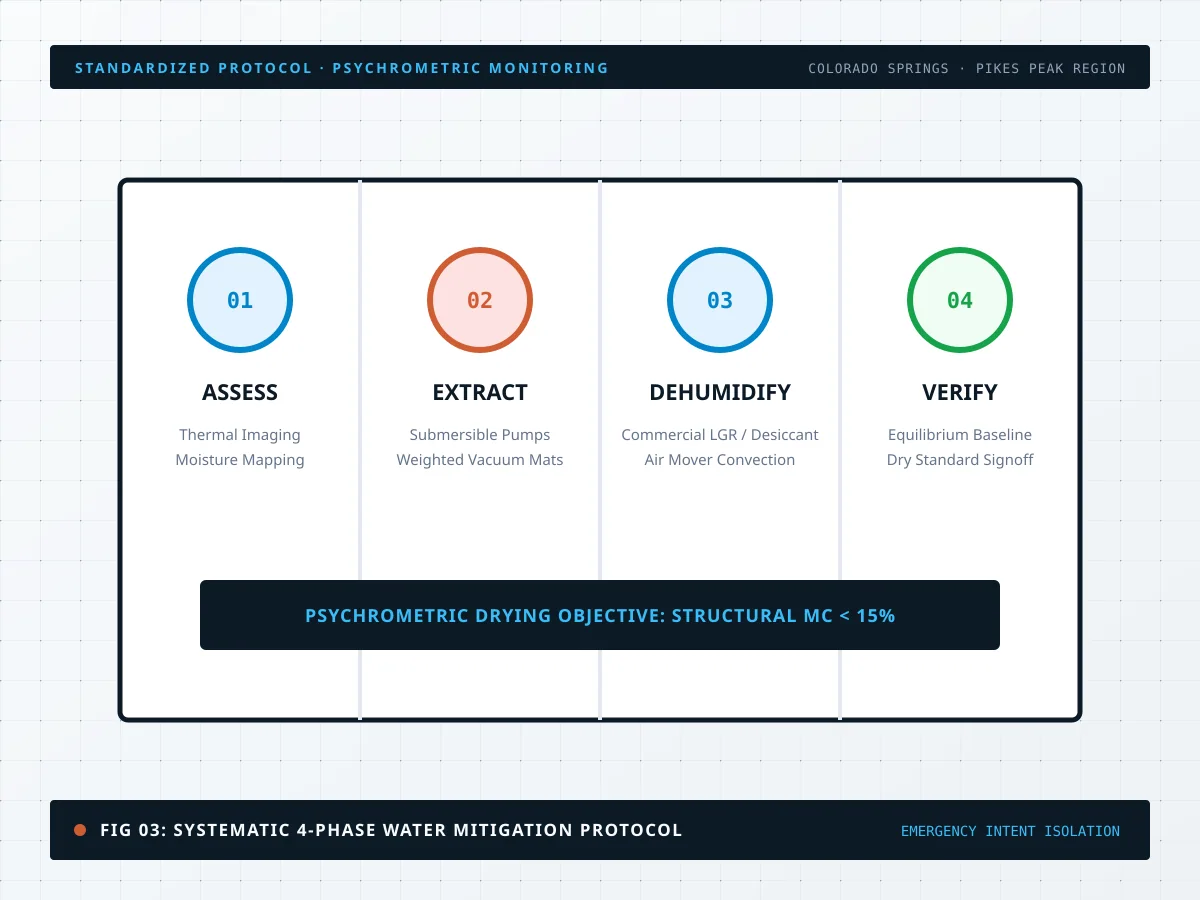
Professional water mitigation involves controlled airflow, industrial refrigerant or desiccant dehumidifiers, and precise psychrometric monitoring. Technicians measure daily temperature, relative humidity, and grains per pound (GPP) to ensure moisture is evaporating at a controlled rate without warping hardwood framing or cracking finishes.
Mitigation is distinct from final cosmetic reconstruction. Mitigation stabilizes the property, sanitizes exposed materials, removes non-salvageable drywall or saturated insulation, and verifies that framing moisture content has reached safe equilibrium levels before any rebuilding starts.
Safe First Steps for Colorado Homeowners
Keep indoor temperatures steady. If your furnace or heating system is functioning safely and is dry, maintain interior temperatures around 68°F to 72°F to assist the natural evaporation of moisture while awaiting mitigation equipment.
Avoid punching holes in ceilings or tearing down walls unless instructed by a qualified mitigation professional, as wet materials may conceal live wiring, plumbing stacks, or attic insulation that can collapse if disturbed.
Step-by-step restoration and drying approach
1. Moisture Diagnostic Assessment
Technicians take baseline moisture readings of unaffected materials to establish dry standards, then map affected walls and flooring using penetrating probe meters and surface moisture sensors.
2. Controlled Demolition & Sanitization
Saturated drywall below the water line (often called a flood cut) and wet fibrous insulation are removed cleanly to allow framing studs to breathe and prevent trapped microbial growth.
3. Structural Drying & Verification
Commercial air movers and dehumidifiers operate continuously for several days. Technicians return regularly to record psychrometric drying logs until all structural framing meets moisture targets.
Frequently asked questions
What is the difference between water mitigation and water restoration?
Water mitigation focuses on stopping the spread of water, removing non-salvageable wet materials, and thoroughly drying the structure to prevent mold and rot. Restoration or reconstruction refers to repairing and replacing drywall, flooring, and finishes once the structure is completely dry.
How long does structural drying typically take?
Most residential water mitigation projects take between three to five days of continuous commercial drying equipment operation, depending on the volume of water, affected material density, and local ambient temperatures.
Will my homeowner insurance cover water mitigation costs?
Most homeowner insurance policies cover sudden and accidental water damage (such as burst pipes) and actually require the homeowner to take reasonable mitigation steps to prevent secondary damage. You should confirm coverage details directly with your insurance adjuster.