Professional moisture management in Colorado Springs
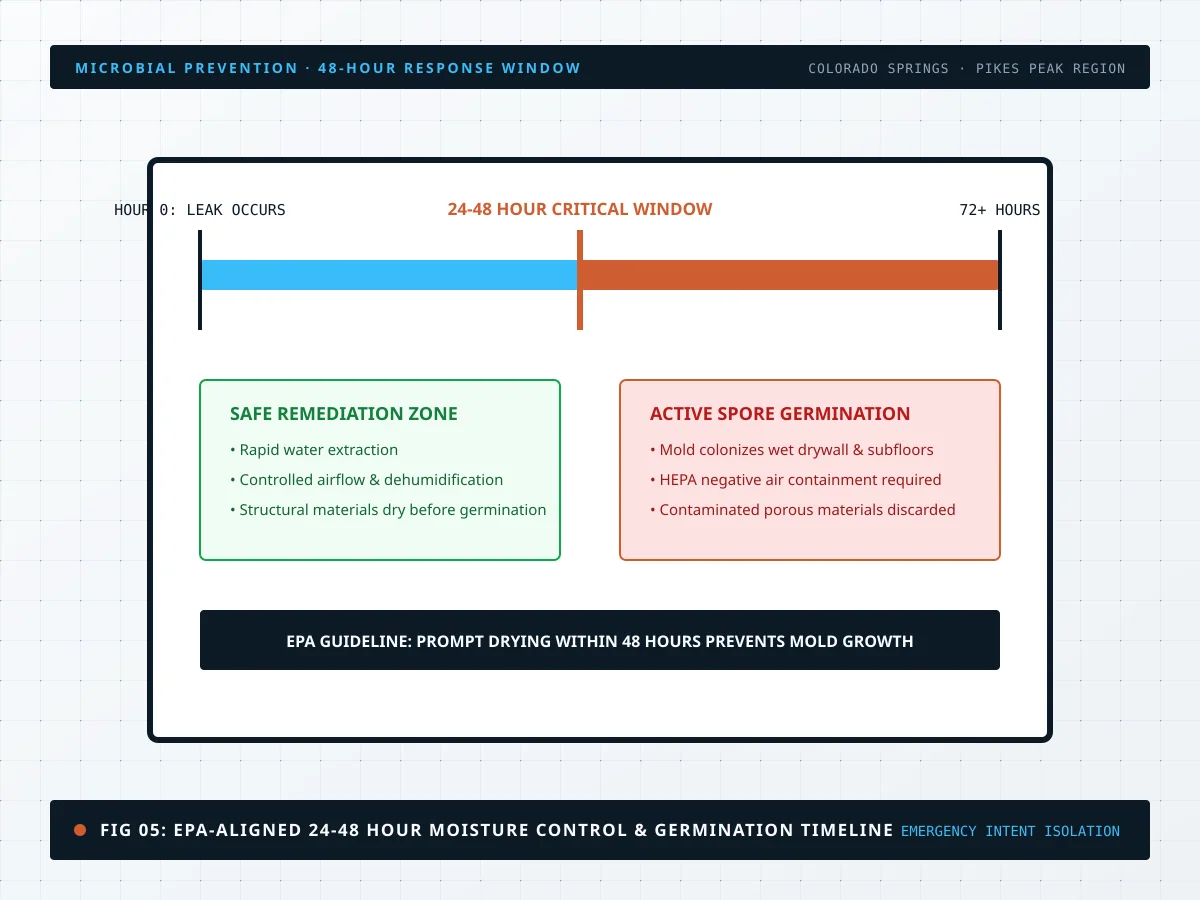
The U.S. Environmental Protection Agency (EPA) notes that the single most important factor in mold control is moisture control. If water damage is cleaned and dried thoroughly within 24 to 48 hours of an intrusion, mold growth can generally be prevented. When moisture remains trapped inside enclosed wall cavities or underneath flooring, however, mold colonies can establish quickly.
Mold remediation involves much more than simply spraying bleach on a surface. Bleach does not penetrate porous materials and can release harsh chlorine fumes. Professional remediation follows structured containment protocols, using negative air machines with HEPA filtration to prevent microscopic spores from spreading into unaffected living spaces during the cleanup process.
Our referral service connects Colorado Springs property owners with independent restoration professionals equipped to assess water damage-induced mold, isolate affected zones, safely remove contaminated porous materials, and clean framing with EPA-registered antimicrobial agents.
Health & Safety Warnings Regarding Suspected Mold
If you suspect mold growth inside your heating and air conditioning (HVAC) ducts, the EPA advises turning off the system immediately to prevent spores from blowing throughout your home. Do not disturb or scrape dry moldy surfaces without proper containment and personal respirators.
Individuals with asthma, allergies, or compromised immune systems should avoid entering areas with visible microbial growth. Consult a licensed medical physician for health concerns related to indoor air quality.
Step-by-step restoration and drying approach
1. Source Identification & Containment
The active moisture source (such as an unaddressed pipe leak or roof seepage) must be corrected first. Polyethylene containment barriers and negative air scrubbers are erected around the work area.
2. Controlled Removal of Contaminated Materials
Materials that cannot be effectively sanitized, such as water-damaged drywall and insulation with active growth, are double-bagged in heavy plastic and disposed of safely.
3. HEPA Vacuuming & Antimicrobial Cleaning
Structural framing is vacuumed with certified HEPA equipment, scrubbed with professional antimicrobial wash solutions, and dried to verified moisture thresholds.
Frequently asked questions
How do I know if I have mold after a water leak?
Common indicators include persistent musty odors, visible dark discoloration or fuzzy patches along baseboards and drywall, peeling paint, or unexplained respiratory irritation when occupying a specific room.
Does Springs Water Damage conduct laboratory mold testing?
No. Springs Water Damage is a free referral service. We connect callers with independent restoration providers. For formal industrial hygiene clearance testing, third-party independent indoor environmental professionals (IEPs) can perform pre- and post-remediation air sampling.
Can I clean up a mold outbreak myself with bleach?
The EPA advises that small areas under 10 square feet on non-porous surfaces can often be cleaned with standard household detergents and water. However, bleach is not recommended for porous wood or drywall, and larger areas require professional containment and HEPA filtration.